

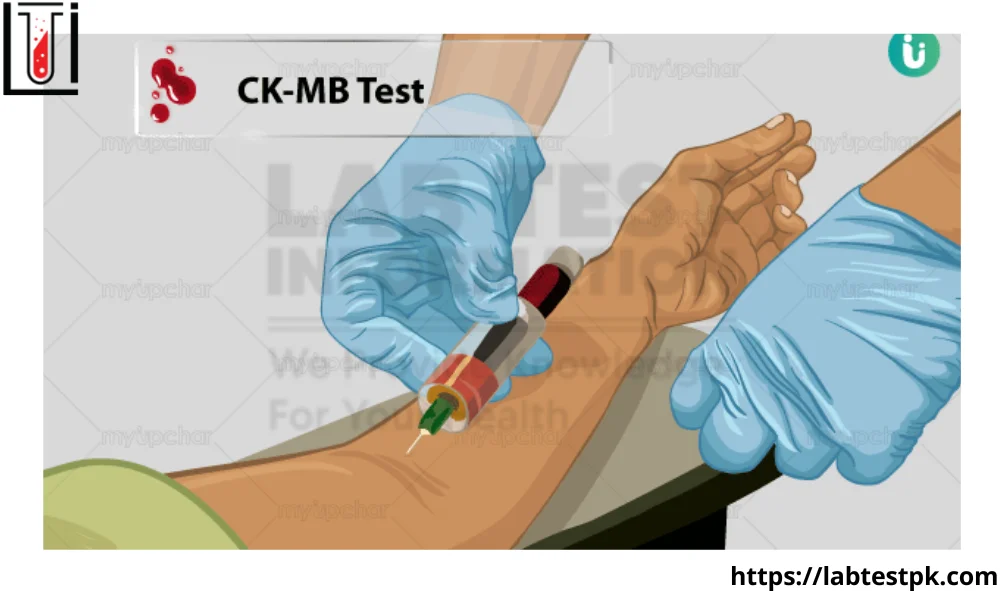
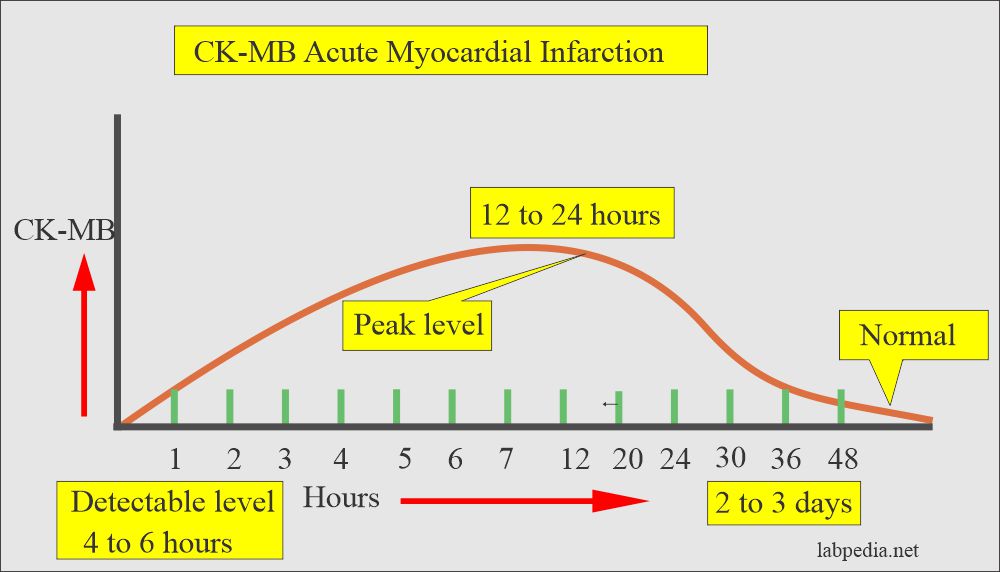
CK-MB Blood Test, CK-MB is an isoenzyme of CK or CPK ( creatine Kinase or Creatine Phosphokinase ). It is mostly found in heart muscle cells. An increase in CK- MB can usually be detected about 3-6 hours after a heart attack. CK-MB peaks in 12 – 24 hours and then returns to normal in about 48-72 hours. If there is a second heart attack or sustained damage, then the level may rise again and stay higher for a longer period.
Purpose of CK-MB Test
- When a person has chest pain, left arm and jaw pain, shortness of breath, and tiredness then Doctors want to decide Whether the pain is caused by a heart attack then CK-MB Test is usually ordered.
- CK-MB test is ordered when the most specific test for heart attack Troponin is not available.
- When a person has high CK or CPK and to determine Whether the muscle damage is in the heart or other muscles the CK test will be ordered.
Normal Ranges of CK-MB Test
5 to 25 IU/L OR Less than 24 U/L
Causes of High CK-MB in Blood
- Kidney Failure
- Recent Heart Attack
- Chronic Alcoholism
- Myocardial and Pericarditis
- High T3 and T4 Levels also cause High CK-MB
Specimen Collection For CK-MB Test
Collect the blood sample in a test tube. Centrifuge the blood sample and separate the blood.
PREPARATION, STORAGE AND STABILITY
- Reagents 1 and 2 are ready to use. Mix reagent R1 and reagent R2 in the ratio of 4:1 respectively to prepare the derived volume of working reagent before use.
- Do not shake vigorously.
- The working reagent is stable for 14 days at 2-8 degrees centigrade.
- The reagent kit should be stored at 2-8 degrees centigrade and stable till the expiry date on the table.
- Do not use of hemolysed sample.
Test Parameters
- Name CK-MB
- Reaction Type UV kinetic
- Wavelength 340 nm
- Blank Setting D.W
- Sample vol. 50microliter
- Incubation 37 C
- Delay Time 300 sec
- Read Time 120 sec
Why do I need a CK-MB Blood Test:
This test is primarily performed to assess the health of your heart muscle (myocardium) and to diagnose or monitor certain heart-related conditions. Here’s why you might need a CK-MB blood test:
Suspected Heart Attack:
The most common reason for a CK-MB blood test is to diagnose a heart attack (myocardial infarction). When heart muscle cells are damaged due to insufficient blood flow (ischemia), they release enzymes like CK-MB into the bloodstream. Elevated CK-MB levels can indicate recent heart muscle damage.Monitoring Cardiac Health:
If you’ve had a heart attack or have been diagnosed with a heart condition, your healthcare provider may use CK-MB testing to monitor your cardiac health and assess the effectiveness of treatments or interventions.Chest Pain:
If you’re experiencing chest pain or other symptoms that could be related to heart problems, your doctor may order a CK-MB test as part of a battery of cardiac tests to evaluate your condition.Cardiac Procedures:
CK-MB levels can be measured before and after certain cardiac procedures, such as angioplasty or coronary artery bypass graft surgery, to monitor the extent of myocardial damage during these interventions.Ruling Out Other Causes:
Sometimes, elevated CK-MB levels may be caused by conditions other than heart disease, such as skeletal muscle injury (e.g., muscle trauma or surgery). In such cases, CK-MB can help differentiate between cardiac and non-cardiac causes of elevated enzyme levels.
It’s important to note that while CK-MB is a useful marker for assessing cardiac health, more specific and sensitive tests, such as cardiac troponin tests, are now commonly used in conjunction with CK-MB to diagnose and monitor heart conditions. These tests offer better accuracy and reliability in detecting heart muscle damage.

[…] to detect or monitor a wide range of medical conditions. The specific tests included in a baseline blood test panel can vary, but here are some common […]
[…] B (ALDOB): Aldolase B is primarily found in the liver and kidney and is involved in the fructose metabolism pathway. It catalyzes the conversion of […]
[…] which isoenzyme ( specific form of CPK) is elevated will help determine which tissue has been […]
[…] Elevated levels of troponin I can indicate heart muscle damage. This can be due to a variety of conditions, […]
[…] heavy lifting and vigorous activities for a few days following the […]
[…] Daytime Sleepiness and tiredness […]